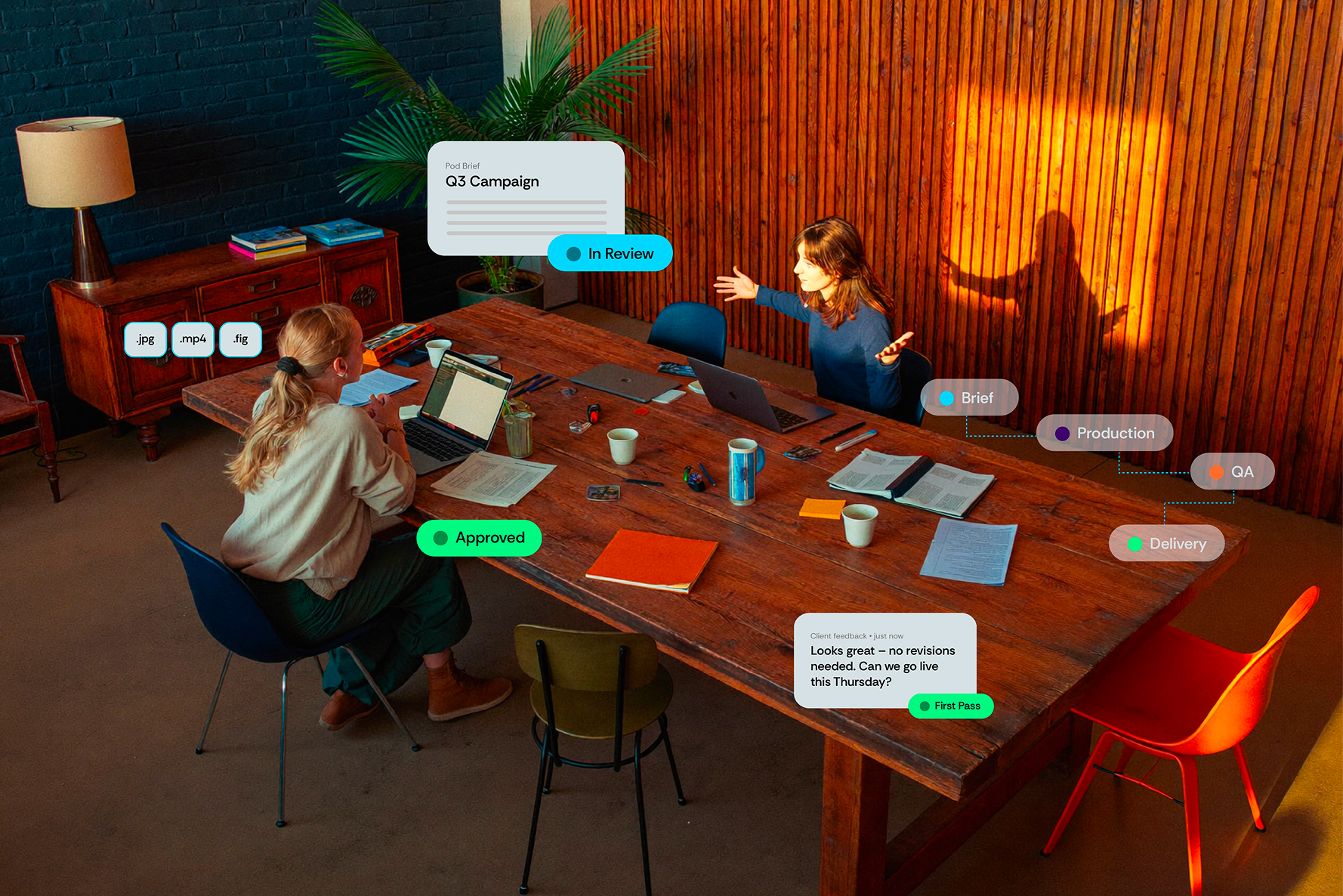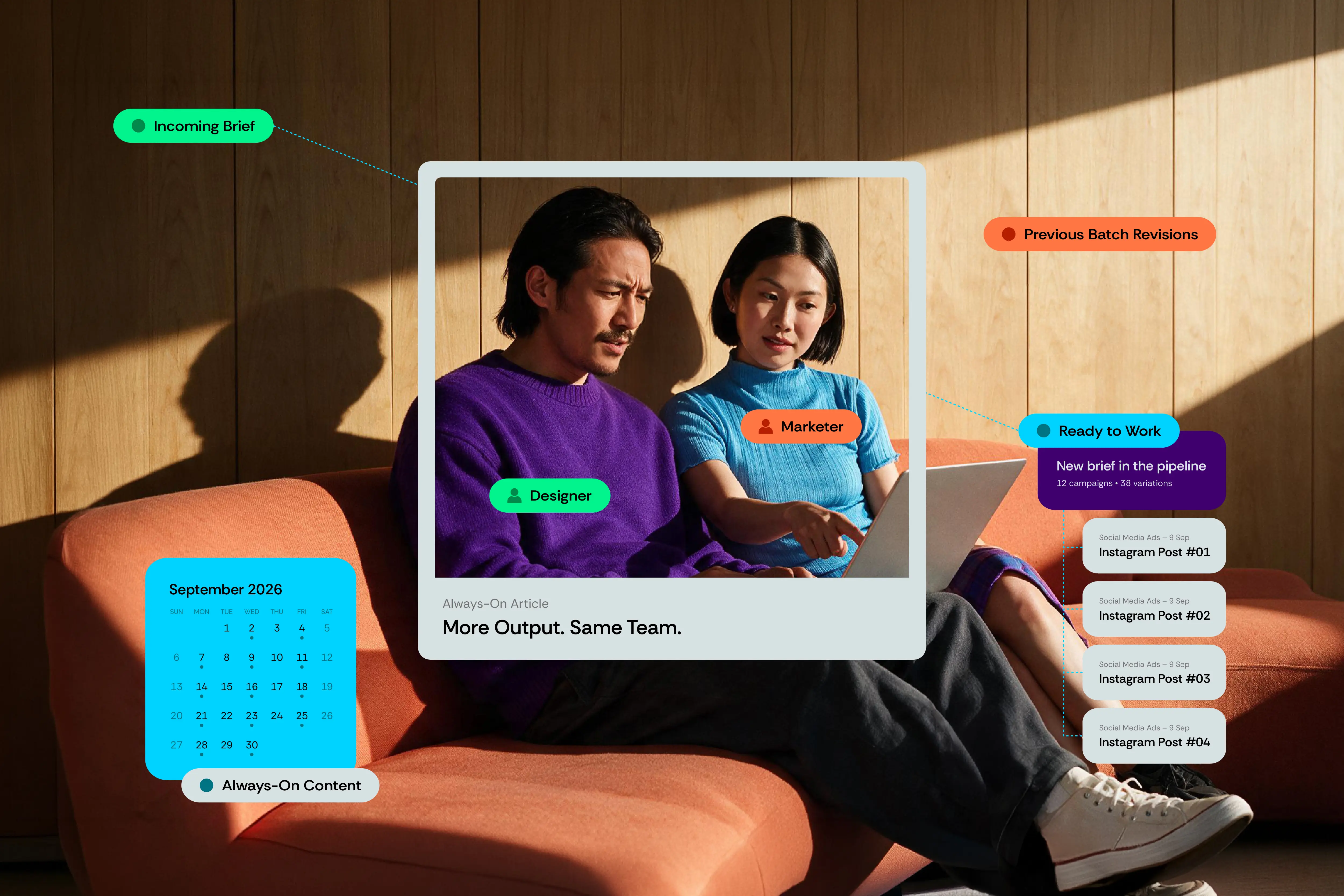
Marketing never stops. Most creative pipelines were not built for that. The gap between the two is where brand consistency breaks down, teams burn out, and output quietly degrades.
Always-on marketing is not a trend. It is the current operating baseline for any brand competing for sustained attention across digital channels. Social feeds do not pause. Email sequences do not take quarters off. Paid campaigns run continuously. Search content compounds over time. Customer touchpoints multiply, not consolidate.
The implication for creative pipelines is structural. Always-on marketing does not need bursts of excellent work. It needs a reliable supply of on-brand creative, produced consistently, across every channel, without degrading under volume pressure.
That is a fundamentally different operational requirement from campaign-based creative production. And most pipelines—built around campaigns, sprints, and agency retainers—were never designed to meet it.
The result is a gap that most marketing leaders feel acutely but rarely name precisely: the creative function cannot keep up with what the marketing strategy actually demands.
What the Data Says About Always-On Creative Demand
The scale of always-on creative requirements has grown faster than the infrastructure most teams have built to support it.
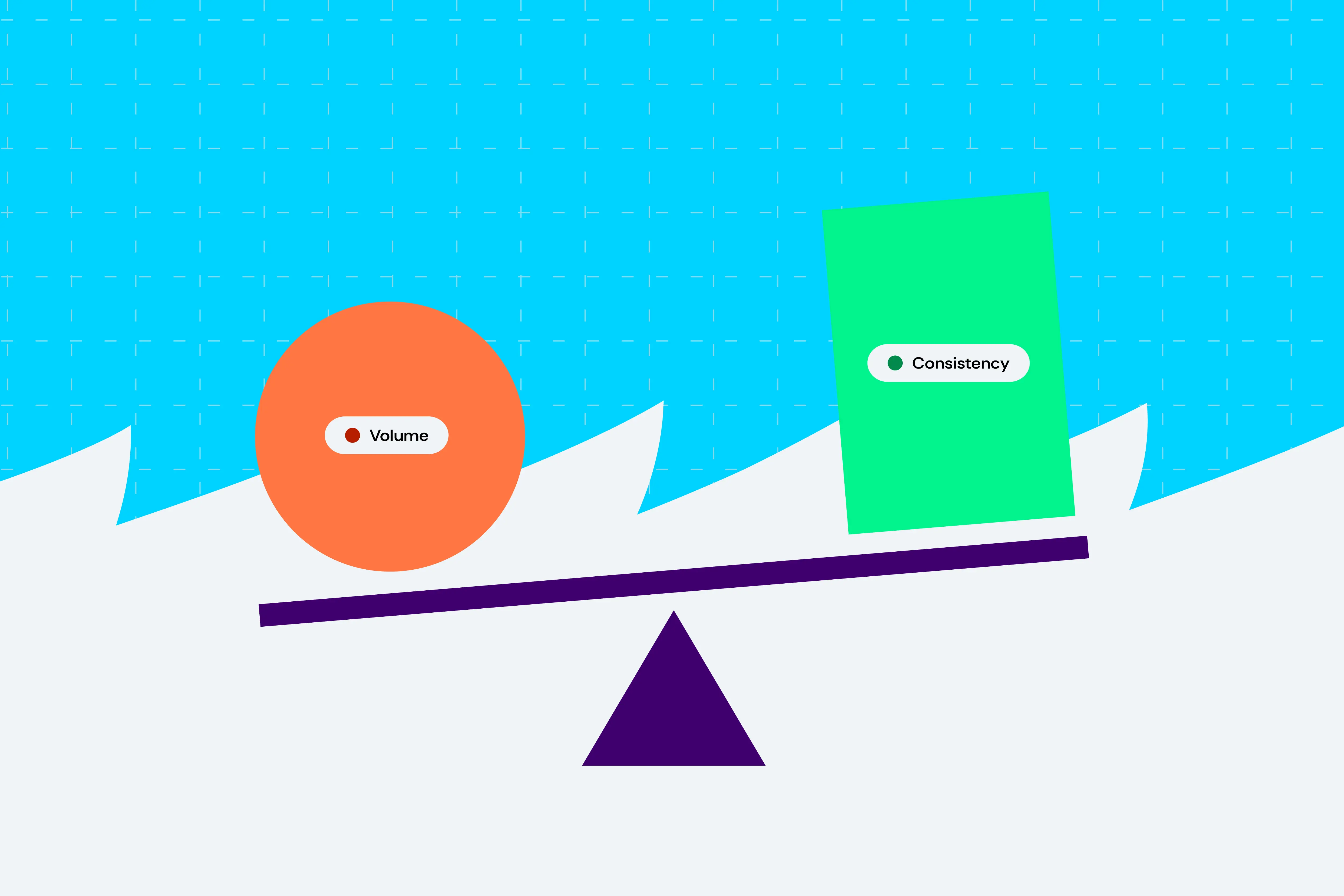
The pattern is consistent: the channel count is rising, the content volume requirement is rising, and the budgets and team capacity to meet those requirements are not. Something has to give, and in most organizations, what gives is quality, consistency, or both.
The Three Structural Demands Always-On Marketing Places on a Creative Pipeline
Always-on marketing is not just more marketing. It places qualitatively different requirements on how creative is produced, governed, and delivered. Understanding those requirements is the first step to building a pipeline that can actually meet them.
Why Campaign-Era Pipelines Fail Under Always-On Conditions
Most creative pipelines in use today were designed for a campaign cadence: discrete projects, defined timelines, clear start and end points. That model works for campaign-based marketing. It fails structurally under always-on conditions, not because the people are wrong, but because the architecture is mismatched to the demand.

The mismatch explains a pattern many marketing leaders recognize: creative partners who perform well on defined campaigns struggle when the engagement becomes ongoing. The work doesn't get worse. The model just wasn't built for the new demand.
What an Always-On Pipeline Actually Requires
Meeting always-on creative demand is not a matter of adding more vendors or increasing retainer scope. It requires building a pipeline with five specific properties that campaign-era models typically lack.
The Always-On Pipeline: 5 Required Properties
The dedicated pod model is built around these five properties. A named team with designer, creative lead, and account manager, assigned to your account, running continuously, building brand knowledge over time, and structured to absorb volume without the management overhead landing on your team. That structure exists precisely because always-on marketing requires it. See how it scales with your output needs.
The question is not whether your brand needs always-on creative capability. It does to your channels, your competitors, and your buyers have already decided that. The question is whether your pipeline is built to deliver it without burning out your team, degrading your brand, or requiring you to manage the production yourself.
FAQ
Is always-on marketing relevant for smaller marketing teams, or just enterprise brands?
Highly relevant for smaller teams, and often more painful. Enterprise brands have the headcount to absorb always-on volume even when the pipeline is inefficient. Smaller teams don't.
A 3–5 person marketing function running always-on creative across four or five channels without the right pipeline structure is exactly where burnout and brand inconsistency compound fastest. The pipeline requirements are the same; the margin for error is smaller.
Can AI tools solve the always-on creative volume problem?
Partially. AI accelerates production of certain asset types, copy variants, image concepts, template-based design, and meaningfully reduces time on repeatable execution tasks.
What it doesn't solve is brand judgment like the ability to make correct creative decisions that reflect the nuances of a specific brand, in context, across a high volume of varied deliverables. That still requires a team with deep brand knowledge. AI is most valuable inside a well-structured pipeline. It doesn't replace the pipeline.
We already have a retainer with an agency. Why isn't that working for always-on?
Traditional agency retainers are usually scoped around deliverables or hours, and staffed based on current agency capacity, not dedicated to your account. When your always-on volume exceeds the retainer scope, you hit constraints.
When the team rotates, brand knowledge resets. When a campaign ends, momentum doesn't carry into the next phase. Retainers provide budget predictability. They don't provide the structural continuity that always-on marketing requires.
How do we know if our current pipeline is built for always-on or campaign-based production?
Ask three questions: Does output quality hold when volume increases, or does it degrade? Does our creative partner need re-briefing on brand standards regularly, or do they operate with accumulated knowledge? Does our in-house team spend more time managing creative production as months go on, or less?
If quality degrades under volume, briefing resets, and management time increases. The pipeline is campaign-era, regardless of how it's structured on paper.
What's the first thing to fix if our always-on pipeline is breaking down?
Identify where the breakdown is actually happening. If it's at volume, meaning output can't keep up with demand, the problem is capacity or process.
If it's at consistency, meaning output doesn't look or feel like the same brand, the problem is team continuity and brand knowledge.
If it's at speed, meaning turnaround is too slow for channel demands, the problem is autonomous brand judgment. The team still needs too much direction to move quickly.
Each failure mode has a different fix. Conflating them leads to solutions that address the wrong problem.