Marketing leaders keep solving the wrong problem. They hire for capacity when the real damage is coming from inconsistency. Here's what the research says, and how to diagnose whether you have a reliability problem.
When a marketing team hits capacity, the reflex is predictable: bring in more help. A freelancer, a design subscription, a retainer agency. Output goes up. The backlog shrinks. And then, slowly, something starts to slip.
A social asset doesn't match the campaign deck. A new freelancer hasn't seen your brand guide. A revision cycle that should take one round takes four. Individually, these feel like execution problems. Together, they're evidence of something structural: a creative function built for volume that can't actually deliver reliability.
The data backs this up, and the cost is higher than most leaders realize.
What the research says about brand inconsistency
Brand consistency has a measurable revenue impact, and the numbers are not marginal.
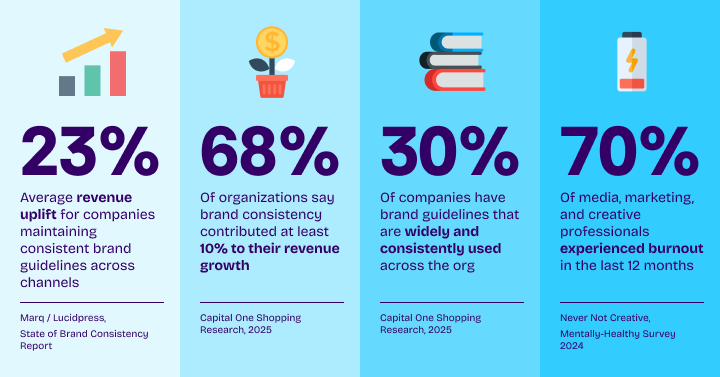
The gap between the first three numbers is the core problem. The revenue case for brand consistency is well-established, but fewer than one in three companies are actually executing it consistently.
The fourth number explains why. The people tasked with maintaining brand quality are already running at or past capacity.
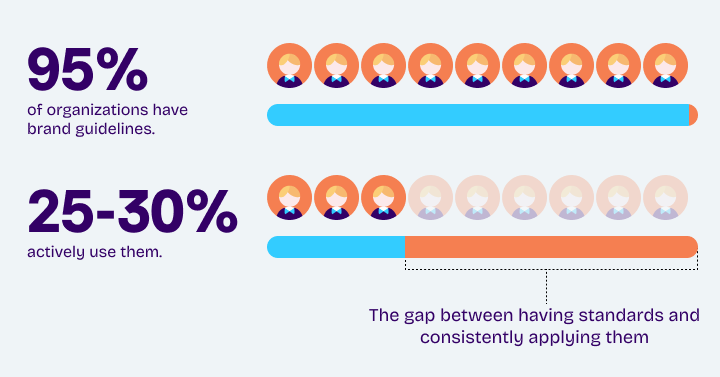
95% of organizations have brand guidelines. Only 25–30% actively use them. The gap between having standards and consistently applying them is where brand equity quietly erodes, and where most creative partnerships break down.
The capacity trap: why more hands doesn't solve the right problem
When a VP of Marketing says their team needs more design capacity, they usually mean one of three things:
- the queue is too long
- turnaround is too slow
- a campaign is coming and the team can't scale to meet it.
These are real problems. But solving them with raw throughput such as having more freelancers, a cheap subscription, or a bigger retainer addresses symptoms without touching the underlying failure mode.
The underlying failure mode is unreliable output.
Unreliable doesn't mean bad. It means inconsistent. It means you can't count on next week's asset looking and feeling like this week's. It means your most effective freelancer is great until they take on another client. It means every new vendor starts the brand-learning process from scratch, and your team absorbs the cost of that reset every single time.
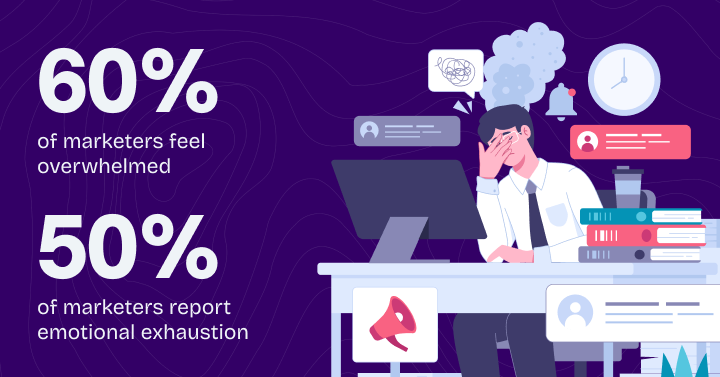
According to Marketing Week's 2025 Career & Salary Survey of more than 3,500 marketers, nearly 60% feel overwhelmed and more than half report emotional exhaustion. When teams are already stretched, the hidden labor of managing unreliable vendors such as re-briefing, correcting, and QA-ing, lands on the people least able to absorb it.
The Four Hidden Costs of the Reliability Gap
The cost of inconsistent creative rarely shows up as a clean line item. It accrues in four places that are easy to rationalize and hard to aggregate.
1. Revision cycles that shouldn't exist
When a designer doesn't know your brand identity well enough to work autonomously, every deliverable requires a correction round to bring it back into standard. Research by Capital One Shopping found that 24% of brand content requests take 2–3 days to fulfill, while 32% take more than a week, largely due to revision loops and approval delays. That delay compounds across a high-volume creative pipeline.
2. The strategic tax on your in-house team
Senior designers and creative directors spend time correcting vendor output instead of doing the work that requires their judgment. This isn't a minor inefficiency, but a structural drag. Every hour spent re-briefing a contractor or QA-ing off-brand work is an hour not spent on strategy, brand evolution, or campaign thinking.
3. Brand drift
This failure mode is slow and easy to dismiss. One asset uses the wrong type weight. Another has a slightly off-palette color. A campaign goes live with a headline tone that doesn't match the brand voice. But a 2025 study by Capital One Shopping noted that only 8% of retailers believe they've achieved consistency across all their channels, meaning the vast majority of organizations are already experiencing measurable drift without naming it as such.
4. The vendor rotation tax
Every time you switch freelancers or rotate to a new pool designer, you absorb an onboarding cost: brand guidelines re-explained, examples reshared, mistakes already corrected made again. This is not a one-time cost but is recurring, and it scales with how often you rotate vendors. According to CHILI publish's Brandwidth report, 43% of respondents missed sales opportunities directly due to capacity gaps and inadequate creative continuity.
The Reliability Diagnostic: 5 Questions To Ask About Your Creative Function
Before evaluating any design partner, whether it’s a freelancer, agency, or subscription, run through these five questions. They surface whether you have a capacity problem or a reliability problem, and whether your current setup is built to solve the right one.
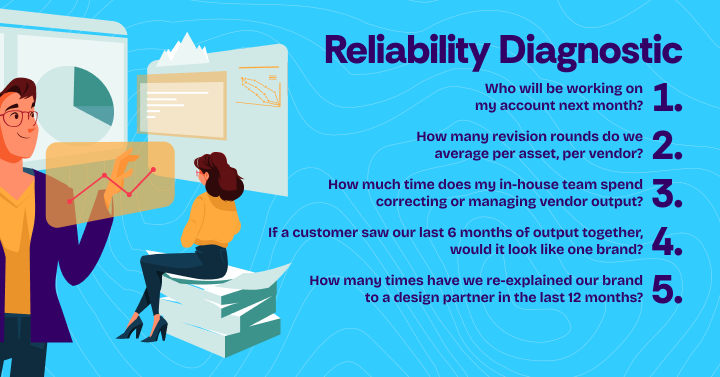
Reliability Diagnostic
1. Who specifically will be working on my account next month?
If the answer involves "whoever is available" or "our team of designers," that's a pool model. Pool models optimize for throughput, not continuity. Brand knowledge resets with every rotation.
2. How many revision rounds do we average per asset, per vendor?
More than one round for brand-standard corrections (not creative refinements) is a knowledge gap, not a quality gap. The vendor doesn't know your brand well enough to produce autonomously.
3. How much time does my in-house team spend correcting or managing vendor output?
Track this for 30 days. If senior designers are spending more than 20% of their time in vendor QA, you have a systemic reliability problem, and you're paying for it twice.
4. If a customer saw our last six months of output together, would it look like one brand?
This is the brand drift audit. Pull assets from different channels, different campaigns, different vendors. Inconsistency is often invisible at the asset level and obvious at the portfolio level.
5. How many times have we re-explained our brand to a design partner in the last 12 months?
Every onboarding is a cost. If the answer is more than once, your creative function has a continuity problem that more capacity won't fix.
What a Reliability-First Creative Function Actually Looks Like
The structural difference between a capacity model and a reliability model is knowledge continuity. A dedicated creative pod, which is a consistent team of designers and a creative lead assigned to your account long-term, is built differently from a freelancer pool or a rotating subscription service. Brand knowledge compounds over time instead of resetting with every engagement.
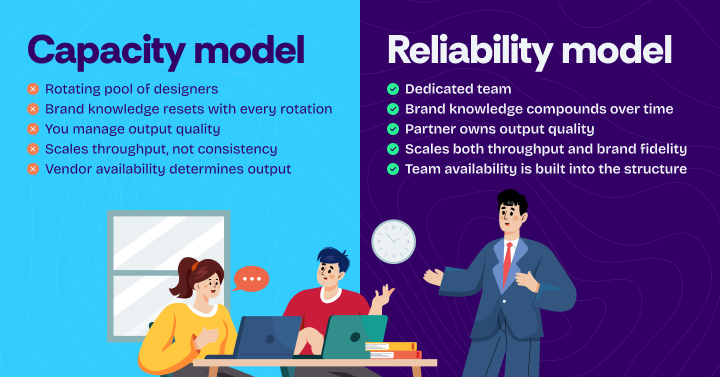
Freelancers optimize for flexibility. Cheap subscriptions optimize for volume. Traditional agencies optimize for campaign delivery.
None of these are designed for the one thing that actually protects brand equity and reduces operational overhead over time. A team that stays, learns your brand, and gets better at your work every month.
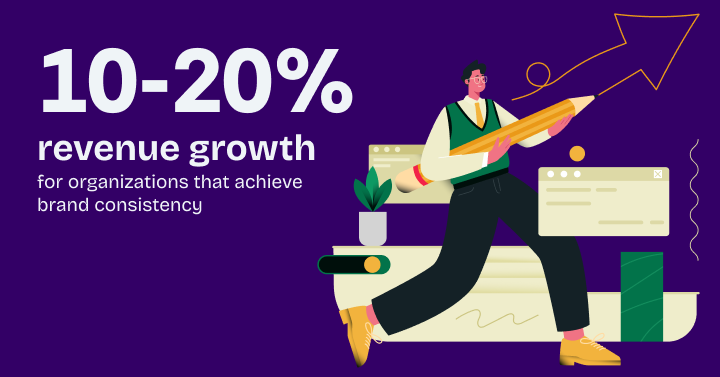
Brand consistency is associated with 10–20% revenue growth across the majority of organizations that achieve it. The reason most don't achieve it isn't that they lack guidelines, but because their creative structure isn't built to enforce them consistently at scale. See how a dedicated design subscription is built differently.
FAQ
Isn't reliability just a nice-to-have if you're hitting your volume targets?
Volume without reliability creates creative debt. Some percentage of every output batch requires correction, re-work, or quietly erodes brand consistency. The 23% revenue uplift associated with consistent branding isn't realized by teams producing high volume. It is realized by teams producing consistent volume. These are not the same thing.
We have strong brand guidelines. Doesn't that solve the knowledge problem?
Brand guidelines reduce the gap but don't eliminate it. The knowledge that comes from working with a brand continuously including the nuances, the patterns, and the mistakes already made, can't be fully transferred in a document. That's why 95% of organizations have guidelines but fewer than 30% apply them consistently: the bottleneck is not documentation, it's continuity of the team applying them.
How do I actually measure the cost of inconsistent creative?
Start with three metrics: (1) revision rounds per asset per vendor, (2) hours your in-house team spends in vendor QA per month, and (3) a portfolio audit. Pull six months of output and assess cross-channel brand fidelity. Most teams find the aggregate cost is significant once it's visible. The challenge is that it accrues invisibly, one corrected asset at a time.
What's the difference between a dedicated creative pod and a preferred freelancer?
A preferred freelancer is a single person with a relationship to your brand. A dedicated pod is a structured team, typically a designer, creative lead, and account manager, with shared context and distributed accountability. If one person is unavailable, the brand knowledge and the relationship don't disappear. That's the structural difference between a dependency and a system.
Should marketing teams stop using freelancers entirely?
Not necessarily. Freelancers work well for isolated, well-scoped projects where brand continuity isn't the priority. The risk is using them to plug ongoing gaps in a high-volume creative pipeline. That's where the reliability problem compounds fastest, and where the hidden costs identified above are most likely to accumulate.